Why We Measure AI Visibility Weekly — and Repeat Every Prompt Three Times
Daily AI visibility checks are useful for fast-moving events. But one answer is still one noisy observation. Learn why GEO Tracker AI uses a weekly benchmark with repeated measurements, when daily monitoring wins, and how Otterly, Peec, Profound, AthenaHQ and Ahrefs approach the trade-off.
Ask the same buyer question twice and an AI engine may not give you the same answer twice. It can name a different brand, choose different sources, or phrase the same recommendation differently. That is not automatically a ranking gain or loss. It is part of measuring a generative surface.
That is why GEO Tracker AI treats a weekly, repeated benchmark as the default decision signal for paid monitoring. For standard monitored prompts, Pro and Business plans run three repeated measurements. We keep a limited set of daily Hero Prompts for moments when speed matters. The point is not to make data look calmer. It is to make the uncertainty visible before a team spends time reacting to it.
Methodology & sources
Editorial review for factual claims (as of 2026-08-25).
This is a product-methodology article, not a claim that three reads create a statistically definitive result. We reviewed GEO Tracker AI’s current paid-plan cadence and repeat settings, then compared publicly documented vendor workflows on 25 August 2026. Identical LLM prompts can produce variable outputs; repeated readings reduce the risk of treating one answer as the whole story, but do not capture every source of change over time. See the linked primary research and vendor documentation below.
- A single daily answer is a useful watch signal, but a poor standalone basis for a broad content decision.
- Three reads show whether a mention was absent, inconsistent, or repeated within the same measurement window.
- Weekly review aligns routine monitoring with the pace at which most teams can investigate, publish, and learn.
- Daily tracking still wins for launches, reputation events, and a small number of revenue-critical questions.
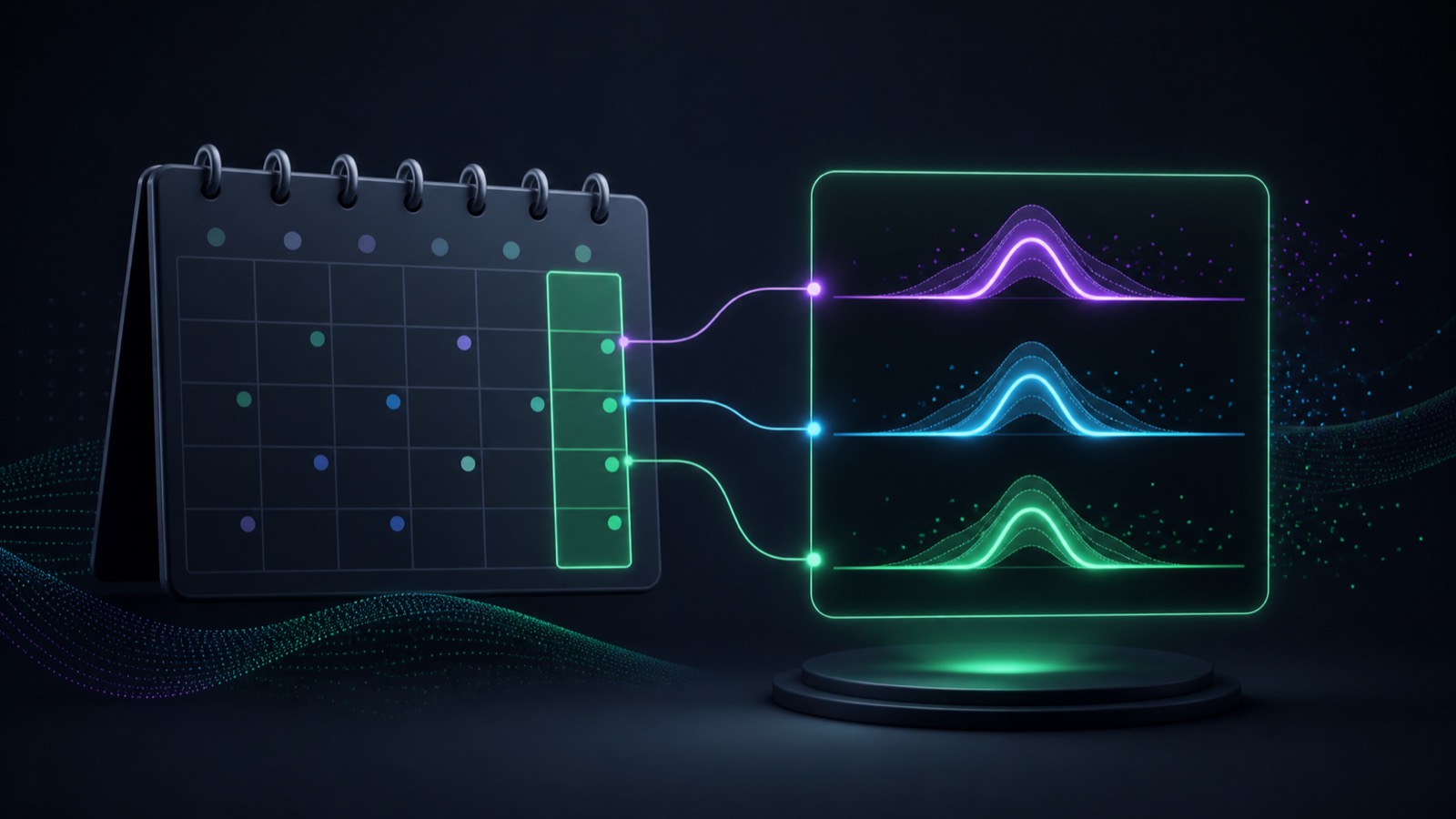
Why one daily AI answer can mislead
AI visibility is not a traditional keyword rank. A search ranking is already an ordered list. An answer engine must decide what to retrieve, how to synthesize it, which brands to name, and which citations to show. Small changes in any of those steps can change the answer you see.
Research on repeated LLM responses documents that identical prompts can return materially different outputs. That makes a one-off result a real observation — just not the only observation you should use to decide that a page, product message, or competitor position has changed. A recent study of repeated LLM output makes the practical point: reproducibility should be tested, not assumed.
Imagine a brand appears in today’s answer. A dashboard that shows only that run might imply a clear win. But if two other reads in the same window do not mention the brand, the more useful conclusion is different: the brand may be in the answer set, but not consistently selected yet. That is an investigation prompt, not a victory lap.
The reverse is true too. One missed mention does not prove that your visibility disappeared. It may reflect normal answer variation, a source-refresh delay, or an engine-level change. A fixed prompt panel, the same engines, and a repeated measurement rule make the next comparison more meaningful.
What three repeats actually do — and what they do not
Three repeats turn a binary-looking dashboard event into an interpretable pattern:
| Observed result | Useful interpretation | Appropriate next move |
|---|---|---|
| 0 of 3 mentions | No observed mention in this benchmark | Check prompt fit, source eligibility, and competitors before changing strategy. |
| 1 of 3 mentions | A possible foothold, but inconsistent | Watch the next weekly benchmark; inspect the answer and cited sources. |
| 2 of 3 mentions | Directionally encouraging, with visible variation | Preserve what changed; look for corroborating evidence. |
| 3 of 3 mentions | Consistent within this window | Track whether it persists across the next weekly benchmark. |
This does not mean that 3 of 3 is a permanent position or that 2 of 3 proves a true 67% probability. Three is a deliberately practical sample: enough to expose disagreement without turning routine monitoring into an expensive research study. NIST’s guidance on measurement uncertainty is a useful caution here: repeated readings at one occasion do not, by themselves, account for variation across time or changing conditions. NIST’s uncertainty guide is why we present repeated reads as transparent evidence, not false precision.
Interactive explainer
See why one read can be a poor weekly decision signal
Adjust the illustrative chance that an AI answer mentions a brand. The three reads show the variation a single daily result would hide.
67% observed
2 of 3 reads mentioned your brand
A single read would report either 0% or 100% here. Three reads preserve the disagreement so the team can investigate or watch the next weekly benchmark.
Illustrative model, not customer data or a claim of statistical confidence.
The interactive example is deliberately labeled illustrative. It teaches the decision logic: a one-shot daily metric collapses each moment into “yes” or “no”; repeated reads retain the disagreement that a marketer needs to see.
Why weekly is our default benchmark
For standard paid monitoring, GEO Tracker AI uses a weekly cadence. In Pro and Business, each standard prompt is measured three times per scan. That choice matches the operational reality of GEO work:
- Most meaningful changes need time to compound. A new page needs crawling, source corroboration, and repeated selection. Checking a normal prompt every morning can create more motion than learning.
- Teams need a calm decision cadence. A weekly benchmark gives a marketer time to inspect cited sources, compare competitors, ship one change, and see whether the next read supports it.
- Repeated runs show within-window variation. Instead of hiding a shaky one-off answer behind a percentage, the measurement can show how many observations supported the result.
- Daily attention is reserved for the prompts that deserve it. Hero Prompts are the exception: a limited daily, single-read watch signal for launches, reputation events, and questions where waiting a week would be irresponsible.
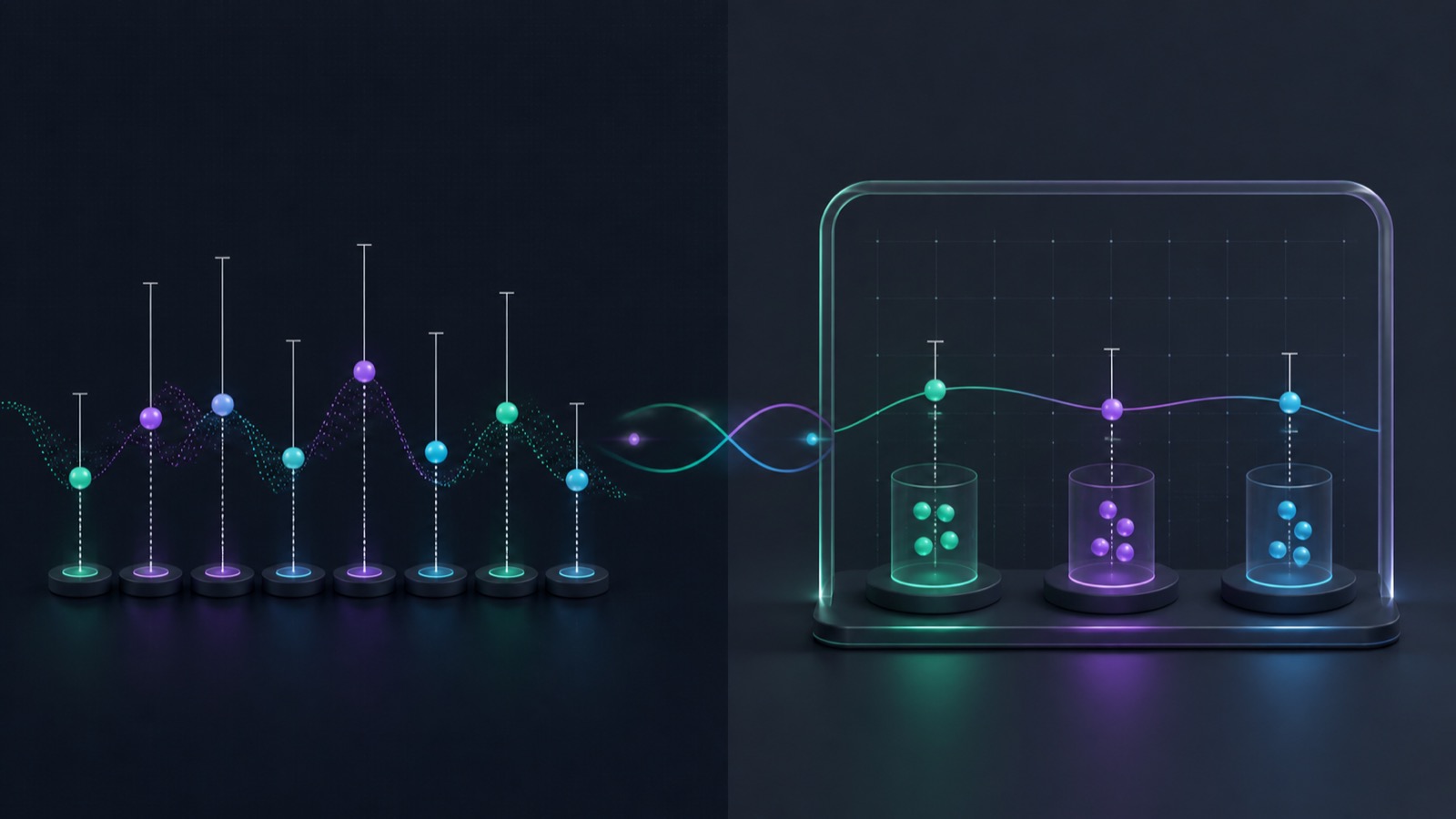
Weekly does not mean slow. It means that the default decision is based on a comparable, repeated benchmark. A daily Hero Prompt can tell you something worth investigating today; the weekly repeated result tells you whether that movement deserves a larger strategy change.
When a daily, single-read measurement is better
There are legitimate cases for daily one-off tracking. We use it for Hero Prompts precisely because the speed-versus-stability trade-off changes when the question is narrow and urgent.
Choose a daily watch signal when:
- you have just launched a product, campaign, or category page;
- a press mention, review, outage, or reputation event may change answers quickly;
- the prompt maps directly to a high-intent buyer question; or
- a team needs early warning and knows it will validate surprising movement before acting broadly.
The limitation is not that daily data is “bad.” It is that one answer should not be asked to carry more certainty than it contains. A daily series can show a trend over time; a single day cannot, on its own, distinguish drift from a durable shift.
How other AI visibility platforms approach cadence
There is no universally right measurement interval. Vendors make different choices based on whether the product optimizes for alerting, a broad daily dashboard, configurable reporting, or an auditable decision benchmark. The comparison below uses only publicly documented practices; where a vendor does not publish a repeat policy, we say so.
| Platform / approach | Publicly documented cadence or emphasis | Strength | Trade-off for routine decisions |
|---|---|---|---|
| GEO Tracker AI | Weekly standard benchmark; Pro and Business standard prompts use 3 repeated reads; limited Hero Prompts run daily with one read | Shows within-window disagreement and preserves daily attention for urgent questions | Not designed for a fresh daily number across every prompt |
| OtterlyAI | Daily prompt monitoring | Fast, simple daily visibility timeline | The public workflow is daily; a daily one-off still needs cautious interpretation when answers vary |
| Peec AI | Prompts run daily | Useful for teams that want broad daily dashboard refreshes | Public quickstart material describes daily runs, not a published three-read routine for a standard prompt |
| Profound | Daily prompt tracking | Strong fit for ongoing daily observation and alerts | A daily default prioritizes recency; users still need a policy for separating one-day wobble from a trend |
| AthenaHQ | Public research presents daily citations as a core metric | Daily citation reporting can surface rapid changes | We did not identify a public per-prompt repetition policy, so a buyer should ask before comparing methodology |
| Ahrefs Brand Radar | Custom prompts can be daily, weekly, or monthly | Cadence is configurable to the question and checking allowance | Configuration shifts the method choice to the user; repetition policy should still be verified for the chosen setup |
The lesson is not “daily is wrong.” Otterly, Peec, Profound, AthenaHQ, and Ahrefs offer legitimate ways to watch AI visibility. The question is what a buyer does after a result changes. If the next action is “rewrite the positioning, brief content, or report a competitor loss,” seeing the consistency of that answer is more valuable than simply seeing it sooner.
The better vendor question: “What does this number represent?”
Before choosing an AI visibility tracker, ask five concrete questions:
- How often does a normal prompt run, and can I distinguish it from an urgent watch prompt?
- Is each reported result one answer or an aggregate of repeated answers?
- Can I see the raw prompt, answer, engine, timestamp, and cited sources behind the score?
- What stays fixed between benchmarks: prompt wording, market, language, engine, and competitor set?
- What should I treat as an alert, and what should I wait to confirm?
Those questions cut through a common dashboard problem: precision-looking percentages without enough context to make a safe decision. Good GEO measurement should make the evidence inspectable, not just make the chart move.
Build a measurement rhythm your team can trust
Use daily monitoring for urgent, limited questions. Use a repeated weekly benchmark for the prompt panel that guides your broader content and brand decisions. Then write down the rule before the next fluctuation arrives: what triggers investigation, what requires confirmation, and what is merely a watch signal?
That discipline is the difference between measuring AI answers and managing AI visibility.
Weekly measurement and repeated reads: the practical rule
Use a daily single read to notice a change. Use repeated reads on a weekly, fixed prompt panel to decide whether that change deserves a broader response. The first is an alerting tool; the second is a decision benchmark.
Frequently asked questions
The same Q&A pairs ship as FAQPage structured data so AI engines can quote them verbatim.
- Why does GEO Tracker AI measure standard prompts weekly?
- A weekly benchmark gives teams a stable review rhythm for a fixed prompt panel. It avoids turning every isolated answer change into an emergency, while still making sustained shifts visible. In GEO Tracker AI, standard monitored prompts use that weekly cadence; urgent, limited Hero Prompts remain available for daily watch signals.
- Why repeat an AI visibility prompt three times?
- Generative answers can differ even when the prompt is identical. Three reads reveal whether a mention appeared in none, one, two, or all three observed answers instead of presenting one answer as certainty. That is a more honest directional signal, not a promise of formal statistical confidence.
- Is daily AI visibility monitoring always better?
- No. Daily monitoring is useful for launches, incidents, breaking news, and a narrow set of high-stakes questions. But a single daily read can exaggerate normal answer variation. For routine content and brand decisions, a repeated weekly benchmark is easier to interpret and less likely to trigger reactive work.
- What does a 2 of 3 AI mention result mean?
- It means your brand appeared in two of the three observed answers for that prompt and engine at that measurement point. It is evidence of within-run variation worth tracking, not proof that the true probability is exactly 67%. Compare the same prompt panel across weekly benchmarks before changing strategy.
- How should I use daily Hero Prompt results?
- Use a daily Hero Prompt as an early watch signal for a launch, reputation event, or a question tied directly to revenue. Confirm a surprising movement against the next repeated weekly benchmark or supporting evidence before treating it as a durable visibility trend or changing your wider content plan.
Sources and official documentation
- Repeated variation in large-language-model outputs — source for the claim that identical prompts can yield variable responses.
- NIST Technical Note 1297: Guidelines for Evaluating and Expressing the Uncertainty of NIST Measurement Results — source for the distinction between repeat readings and variation over time.
- OtterlyAI: monitoring interval, Peec quickstart, and Profound prompt tracking — official documentation reviewed for daily-monitoring descriptions.
- AthenaHQ State of AI Search Report 2025 and Ahrefs custom-prompt cadence documentation — public context for daily citation reporting and configurable cadence.
- GEO Tracker AI paid-plan configuration and cadence scheduler, reviewed internally on 25 August 2026. Product behavior described above applies to standard monitored prompts and the current Pro/Business repeat settings; Hero Prompts follow the separate daily one-read workflow.
Related articles
Your GEO Score
Establish an AI mention baseline you can defend
GEO Tracker AI runs repeatable checks for supported engines so you can see whether your brand is mentioned, what context shows up, and how that changes week over week — complementary to Search Console, not a replacement for it.